Published by Blue Grid Media • Updated for 2026 • 12 min read
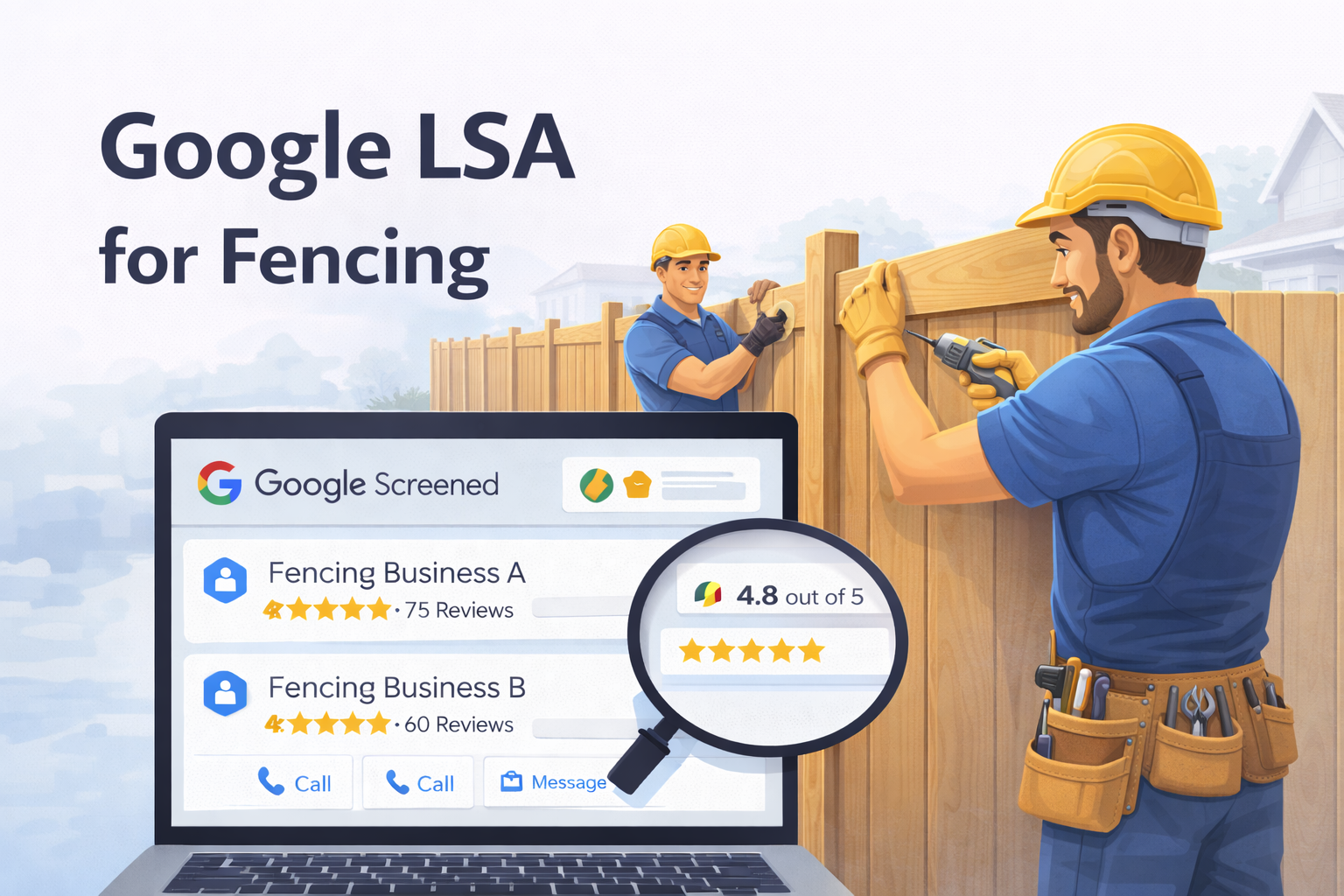
Why Fencing Is a High-Ticket LSA Category That Most Contractors Overlook
Here's what makes fencing different from most LSA categories: the average project value. A standard 150-linear-foot wood privacy fence runs $3,500-$5,500 installed. Vinyl jumps to $4,500-$7,500. Ornamental aluminum? $5,000-$10,000+. These aren't $200 service calls. These are multi-thousand-dollar installations, and the leads cost the same $25-$65 as lower-ticket categories.
That math creates one of the best ROAS opportunities on the entire LSA platform. A $45 lead that converts into a $5,000 vinyl fence installation is a 111:1 return before materials and labor. Even after accounting for your 40-50% close rate and all job costs, the advertising ROI for fencing contractors is exceptional.
Yet most fence companies aren't on LSA. In a typical metro market, you'll find 3-5 fencing contractors in the LSA pack compared to 15-20 plumbers or 10-15 HVAC companies. That means less competition for the same top-of-page placement. If you're a fence contractor not running LSA right now, you're giving those top positions to your competitors for free.
Fencing LSA Economics: What the Numbers Actually Look Like
Let's break down the real cost-per-signed-contract math for fencing LSA, because this is what actually matters to your bottom line.
Average cost per LSA lead: $40
Close rate (after site visit): 45%
// Cost per signed contract
$40 ÷ 0.45 = $88.89 per booked job
// Average project revenue
150 linear ft wood privacy fence: $4,500
Material + labor cost: ~$2,700
Gross profit: $4,500 - $2,700 = $1,800
// Net after ad cost
$1,800 - $88.89 = $1,711 net profit per job
ROAS = $4,500 ÷ $88.89 = 50.6x return
Compare that to the typical homeowner lead-gen platforms where you're paying $75-$200 per lead that's been shared with 3-4 other fence companies. Your close rate drops to 15-20% because the homeowner got four quotes and picked the cheapest. Cost per signed contract on those platforms? $375-$1,000+.
See the real numbers for your trade
Plug in your industry, budget, and close rate. Our calculator shows your projected leads, cost per booked job, and ROAS.
Setting Up Your Fencing LSA Profile for Maximum Visibility
Fence contractors who rush through the LSA setup end up with a generic listing that doesn't differentiate them from the other 2-3 companies in the pack. Here's how to build a profile that actually wins clicks and calls.
10 Job Types That Drive Fencing LSA Leads
Every job type you enable is a new set of search queries where your listing can appear. The fence contractor who only enables "fence installation" is missing 60-70% of the searches happening in their market. Here's the full list.
| Job Type | Avg. Project Value | Why It Matters |
|---|---|---|
| Wood fence installation | $3,000-$6,000 | Most searched material. Cedar and pressure-treated pine dominate residential installs. |
| Vinyl fence installation | $4,500-$8,000 | Higher ticket, premium customers. Vinyl searchers are typically less price-sensitive. |
| Chain link fence installation | $1,500-$3,500 | Lower ticket but highest volume. Dog owners and backyard enclosures drive most searches. |
| Aluminum / ornamental fence | $4,000-$10,000+ | Premium segment. Pool code compliance and curb appeal searches drive these leads. |
| Fence repair | $200-$800 | Lower ticket but fast close. Storm damage creates surges. Repair leads often convert to full replacement. |
| Gate installation / repair | $500-$2,500 | Separate search category. Driveway gates and automatic gates are high-margin add-ons. |
| Privacy fence installation | $3,500-$7,000 | Intent-specific search. "Privacy fence" searchers have already decided on style, just need a builder. |
| Pool fence / safety fence | $1,500-$4,000 | Code-driven demand. Many municipalities require pool fencing by law. Customers need it done ASAP. |
| Farm / ranch fencing | $2,000-$15,000+ | Rural markets. Board fence, split rail, and field fencing for livestock. Less LSA competition. |
| Commercial fencing | $5,000-$25,000+ | Property managers, daycares, restaurants with outdoor seating. Higher ticket, repeat client potential. |
Material Conversations: How the Phone Call Shapes Your Revenue Per Job
When a homeowner calls from your LSA listing, they usually have a material in mind, but they're often open to upgrading once you explain the trade-offs. This phone conversation is where your revenue per job gets determined.
The Typical Material Ladder
Chain link ($10-$20/linear ft installed) is the entry point. Wood ($20-$35/linear ft) is the most popular. Vinyl ($25-$45/linear ft) is the upgrade pitch. Aluminum/ornamental ($30-$60/linear ft) is the premium tier.
When someone calls asking about wood, the natural conversation is: "We install a lot of cedar privacy fences. Just so you know, vinyl runs about 30% more per foot but it never needs staining and comes with a lifetime warranty. Would you like me to include both options in the estimate?" This isn't a hard sell. It's giving the customer information they'll appreciate, and about 20-25% of callers upgrade from wood to vinyl when presented with both options at the estimate.
How to Present Multiple Options Without Overwhelming
- Always quote the material they asked about first. If they called about wood, lead with wood pricing. Adding vinyl as a secondary option is helpful. Showing up with six different material quotes feels like a car dealership.
- Bring physical samples to the site visit. Homeowners make decisions visually. A 12-inch section of stained cedar next to a vinyl panel sells the upgrade better than any price sheet.
- Frame the upgrade in lifetime cost. "The vinyl is $1,800 more upfront, but you'll never spend $400 every 2-3 years on staining. Over 10 years, vinyl actually costs less." Lifetime cost framing moves 1 in 4 wood customers to vinyl.
- Mention gate automation as a separate line item. Automatic gate openers ($800-$2,500 installed) are pure margin. Most customers don't know this is an option until you mention it.
Navigating Permits and HOA Rules (Without Losing the Job)
Permits and HOA restrictions kill more fence deals than price objections do. The homeowner gets excited about a new fence, calls you from LSA, loves the estimate, then finds out their HOA only allows 4-foot aluminum fencing in the front yard or their city requires a survey and a 3-week permit process. Suddenly the momentum dies.
The fence contractor who knows how to navigate this wins the job every time.
Permits: Turn a Hassle Into a Selling Point
Most municipalities require a fence permit. The process involves submitting a site plan showing the fence location relative to property lines, setbacks, and easements. Requirements vary: some cities approve permits in 2-3 days, others take 2-3 weeks.
Here's the key: offer to handle the permit for the customer. Many homeowners have never pulled a permit and find the process intimidating. If you say "We handle the permit process for you, it's included in our price," you've just eliminated the biggest friction point and differentiated yourself from competitors who say "you'll need to pull a permit before we can start."
HOA Compliance: Know Before You Quote
Ask about HOA restrictions on the very first call. "Are you in an HOA? Do you know their fence guidelines?" This saves you from driving out for an estimate, designing a 6-foot cedar privacy fence, and then learning the HOA only allows 4-foot ornamental. That's a wasted trip and a frustrated customer.
Common HOA restrictions include: maximum fence height (often 4 feet in front yard, 6 feet in back), approved materials (many HOAs ban chain link), color requirements, and style restrictions (picket only, no solid panels, etc.). Know the top 5-10 HOAs in your service area and their fence rules. This knowledge on the phone call makes you sound like the expert you are.
Property Line Surveys: The Deal Saver
Property line disputes are the number one source of fence installation complaints. A customer installs a fence, the neighbor claims it's on their property, and you get dragged into the middle.
Recommend a property survey for any job where the boundary isn't clearly marked. Better yet, partner with a local surveyor and offer to coordinate the survey as part of your service. Surveys cost $200-$500 and eliminate boundary disputes completely. Framing it as "we want to protect you from any issues with your neighbors" positions you as careful and professional.
The Estimate Process: From LSA Call to Signed Contract in 72 Hours
Fencing is an estimate-intensive trade. Unlike junk removal or locksmith services where you can quote over the phone, fencing requires a site visit. Terrain, grade changes, underground utilities, tree roots, existing structures, and property lines all affect pricing. You can't quote accurately from a phone description.
That said, the speed of your estimate process is the single biggest variable in your close rate. Here's the timeline that wins jobs.
Day 1: The LSA Call
Answer within 15 seconds. Ask: what material are you interested in? How much fencing do you need (approximate)? Are you in an HOA? When would you like the work done? Then schedule the site visit for the next available slot, ideally within 24-48 hours.
Day 1-2: The Site Visit
Measure the linear footage. Check grade and terrain. Identify gate locations. Note any obstacles (trees, boulders, utility boxes). Discuss material options with samples. Ask about the property line and whether they've had a survey.
Day 2-3: Send the Estimate
Email a professional written estimate within 24 hours of the site visit. Include a line-item breakdown: materials, labor, permit fee, and any add-ons (gates, post caps, staining). The estimate should be clean, easy to read, and include a "valid for 30 days" line. Attach 2-3 photos of similar installations you've completed.
Day 3-4: The Follow-Up
If they haven't responded within 24 hours, send one follow-up: "Just wanted to make sure you received the estimate. Any questions I can answer?" Keep it short and low-pressure. Fence decisions take a little longer than emergency trades because they're discretionary purchases, but the contractors who follow up close 15-20% more estimates than those who don't.
How to Outrank Other Fence Contractors on LSA
With only 3-5 competitors in most fencing LSA markets, ranking in the top 3 is achievable faster than in saturated categories like plumbing or HVAC. Here's what moves the needle. For the complete algorithm breakdown, see our LSA ranking factors guide.
Check your current position before you change anything with the free LSA Visibility Scanner.
1. Reviews Are Your Biggest Lever
Most fence contractors have 20-50 Google reviews. Getting to 75+ puts you ahead of 90% of the fencing competition in most markets. The challenge with fencing is lower job volume compared to trades that do 5+ jobs per day. If you're completing 2-4 installations per week, you need a higher review-request conversion rate.
You pay for the whole day and invoice part of it. The free contractor hourly rate calculator prices that gap in.
Ask for reviews at the final walkthrough when the customer is admiring their new fence. Text the review link while you're still on the property. For complete review tactics, see our LSA review strategy guide.
2. Responsiveness Matters (Even for Non-Emergency Work)
Fencing isn't an emergency category, but Google still tracks your response rate and time. Answer every LSA call promptly. If you miss a call, return it within 5 minutes. Contractors with 90%+ answer rates consistently rank above those with 70% answer rates, regardless of review count.
3. Profile Completeness and Photos
Upload 15-20 photos of completed installations across different materials. Google uses profile completeness as a ranking signal. A profile with 20 installation photos and a detailed business description outranks a bare-bones listing with 3 photos every time.
4. Budget and Hours
Set your daily budget high enough to capture all available leads in your market. Fencing searches are lower volume than plumbing or HVAC, so your daily budget doesn't need to be $200+. Start at $50-$80/day and adjust based on lead flow. Extended hours help too, especially Saturday availability since that's when homeowners are home to discuss fence projects.
Seasonal Demand and Budget Strategy for Fence Contractors
Fencing demand follows a predictable seasonal curve that you should build into your LSA budget.
Spring Surge (March-May)
This is peak fence season. Homeowners start outdoor projects as weather warms up. Budget should be 40-50% above your baseline. Schedule your crew for maximum capacity. This is also when storm damage from winter creates repair demand, and repair leads often convert to full replacements.
Summer Steady (June-August)
Sustained demand but slightly below spring peak. Pool fence installations spike as families open pools and realize they're out of code compliance. New homebuyers who closed in spring start fencing projects they've been planning since the inspection.
Fall Drop-Off (September-November)
Demand drops 20-30% as homeowners shift to indoor projects. However, this is when commercial fencing picks up. Businesses want perimeter fencing completed before winter. Property managers address deferred maintenance before year-end budgets close. Keep your LSA active but reduce the budget 15-20%.
Winter Hibernation (December-February)
Lowest volume in cold-weather markets where frozen ground prevents post installation. In southern states, this dip is much smaller. Don't pause your LSA entirely. Lower the budget to maintenance level ($20-$30/day) to keep collecting impressions, reviews, and ranking momentum.
Some fence contractors in northern climates pause LSA in winter and are shocked when it takes 4-6 weeks to rebuild their ranking in spring. Staying active at low spend preserves your position so you're ready to scale when March hits.
High-Margin Add-Ons That Increase Revenue Per Job
The base fence installation is your core revenue. But the add-ons are where margin lives because they're low-effort incremental revenue on a job you're already doing.
- Automatic gate openers ($800-$2,500 installed): Mention this at the site visit for any driveway gate. "Would you want this to be automatic? We can install an opener that works with a remote or your phone." About 30% of driveway gate customers add automation.
- Decorative post caps ($8-$25 per cap): On a fence with 25 posts, that's $200-$625 of nearly pure margin. Bring sample caps to every site visit.
- Staining/sealing for wood fences ($1.50-$3.00/linear ft): Offer it at the time of install when your crew is already on-site. "We can stain it now for $X, which saves you from having to hire someone separately in 6 months." About 40% of wood fence customers add staining.
- Old fence removal ($3-$5/linear ft): Customers need the old fence gone before the new one goes up. Some contractors include removal in their price. Others list it separately. Either way, it's revenue and the customer needs it done.
- Lattice or privacy slat additions ($5-$15/linear ft): Converting a chain link fence to a semi-private fence with slats, or adding lattice toppers to a 6-foot privacy fence for extra height where allowed.
A fence contractor who actively offers add-ons increases their average job revenue by 15-25% without any additional marketing spend. Every dollar of add-on revenue is essentially free because you already paid for the lead and the crew is already on-site.
Disputing Invalid Fencing LSA Leads
Google lets you dispute charges for calls that don't qualify as legitimate leads. For fencing contractors, common disputes include:
- Commercial/industrial inquiries beyond your scope: A call for 2,000 feet of security fencing at a warehouse when you only do residential.
- Wrong service requests: "Can you build me a deck?" (That's not fencing.)
- Outside your service area: Calls from zip codes you don't cover.
- Spam and solicitors: Sales calls, wrong numbers, robocalls.
- Tire-kicker calls under 30 seconds: "How much per foot?" followed by an immediate hang-up.
Review your leads weekly and dispute anything that doesn't qualify. Most fence contractors recover 10-15% of their monthly LSA spend through legitimate disputes. See our full LSA dispute guide for details.
LSA vs. Other Lead Sources for Fence Contractors
| Lead Source | Avg CPL | Close Rate | Cost per Contract | Lead Type |
|---|---|---|---|---|
| Google LSA | $25-$65 | 40-50% | $55-$140 | Exclusive, high intent |
| Google Search Ads | $30-$90 | 25-35% | $90-$260 | Exclusive, keyword targeted |
| HomeAdvisor / Angi | $50-$150 | 15-20% | $250-$750 | Shared 3-4x |
| Thumbtack | $30-$100 | 12-18% | $170-$560 | Shared 3-5x |
| Nextdoor / referrals | $0-$20 | 50-70% | $0-$40 | Warm, trust-based |
Referrals and Nextdoor recommendations will always have the best economics because they come with built-in trust. But they're not scalable. You can't generate 15 referrals per week on demand. LSA is the best scalable paid lead source for fence contractors, and Google Search Ads can supplement for high-value material-specific keywords.
For a complete platform comparison, read our LSA vs. Thumbtack vs. Angi breakdown.
Fencing LSA FAQs
How much do fence contractor leads cost on Google LSA?
Fencing LSA leads typically cost $25-$65 per call. Suburban markets with high homeownership rates see higher CPL ($45-$65) due to stronger competition. Smaller markets run $25-$35. With average project values of $3,500-$7,500, even a $65 lead generates a 30-50x ROAS when it converts.
What license do fence contractors need for LSA?
Requirements vary by state. California requires a C-13 fencing contractor license. Florida requires a general or specialty contractor license. Some states have no specific fencing license but require home improvement contractor registration above a dollar threshold. Google verifies whatever your state mandates, plus general liability insurance and background checks.
Should I list different fence materials as separate job types?
Yes. Enable wood, vinyl, chain link, aluminum/ornamental, fence repair, and gate installation as separate job types. Each material matches different search queries. If you only enable the generic category, you'll miss material-specific searches like "vinyl fence installer near me."
How long does it take to get verified for fencing LSA?
Typically 2-4 weeks. Google verifies your contractor license, liability insurance, and runs background checks. Having all documentation ready before applying speeds up the process. The most common delay is insurance verification where the business name doesn't exactly match.
Can I run LSA for both residential and commercial fencing?
Yes. Most LSA leads will be residential, but small commercial jobs (restaurants, daycares, property management) do come through. Enable commercial fencing if you offer it. Large industrial projects come through other channels, but LSA can capture small-to-mid commercial work.
How do I handle the estimate process for fence jobs?
Fencing requires on-site estimates due to terrain, property lines, and grade factors. Schedule the site visit within 24-48 hours of the LSA call. Measure, discuss materials with samples, and send the written estimate within 24 hours of the visit. Contractors who complete this cycle in under 72 hours close 40-50% of estimates.
Ready to Book More Fence Installations?
We help fencing contractors set up, optimize, and scale Local Services Ads. Get a free audit of your current LSA performance or get started from scratch.
Get My Free Fencing LSA AuditMore on Google Local Services Ads
Part of the BGM Local Services Ads library. Pair this with the master pillar and the deep-dive guides: