Published by Blue Grid Media • Updated for 2026 • 12 min read
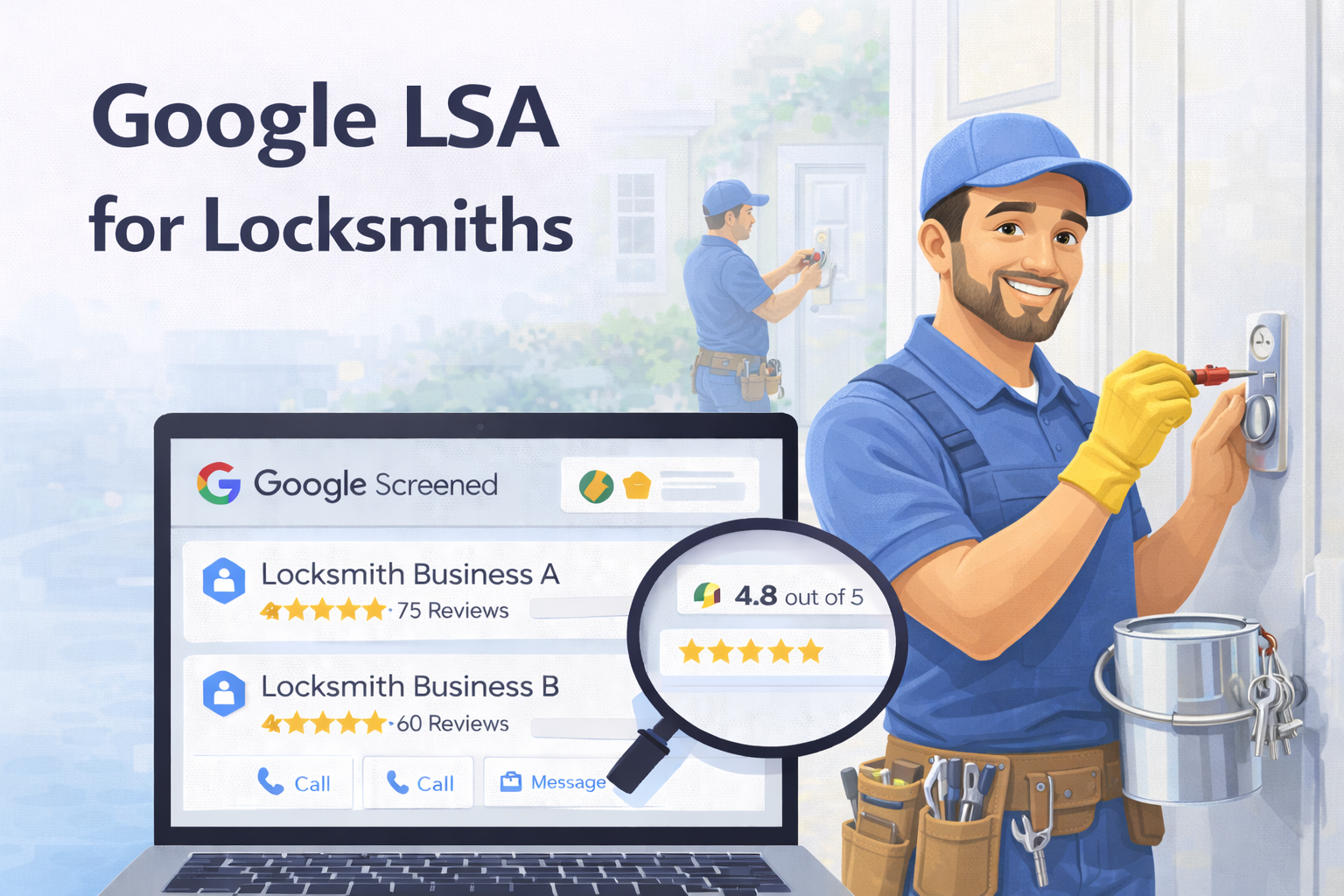
Locksmiths have a problem that no other trade deals with: scam operators have poisoned the well. Fake locksmith listings on Google, bait-and-switch pricing, unlicensed guys in unmarked vans charging $400 for a $75 job. Customers are rightfully suspicious when they call a locksmith they've never heard of, and that suspicion costs legitimate locksmiths real money every day.
Google Local Services Ads are the single most effective tool for overcoming that trust gap. When someone searches "locksmith near me" at 11 PM because they're locked out of their house, they see your listing at the top of the page with a Google Verified badge, your real reviews from real customers, and a direct call button. That badge tells them Google verified your license, insurance, and background. For a customer who's nervous about getting scammed, that's the difference between calling you and calling the next listing.
This guide covers how to set up LSA for a locksmith business, what it costs, how to capture emergency calls at the highest possible rate, and how to turn $100 lockouts into $300-$400 jobs with on-site upsells that customers actually want.
Is Google LSA actually worth it for locksmiths in 2026?
Yes, and locksmiths may benefit from LSA more than any other trade because of how directly the Verified badge solves the industry's biggest problem.
Consider the economics. Locksmith CPLs are among the lowest in LSA, typically $15 to $45 depending on your market. Emergency lockout calls, which make up the majority of LSA locksmith leads, convert at 70-85% because the customer needs help right now. There's no estimate phase, no "let me get two more quotes," no waiting period. They're locked out. You answer the phone. You show up. You get paid.
At a $30 CPL and an 80% conversion rate on emergency calls, your cost per booked job is roughly $38. The average residential lockout service runs $75 to $250 depending on complexity and time of day. Even on a basic $100 lockout, you're looking at a nearly 3:1 return on a single service call with zero estimate time and no follow-up required.
Where it gets significantly better is the upsell opportunity. A customer who just got locked out is acutely thinking about their locks. Offering a rekey, a deadbolt upgrade, or a smart lock installation while you're already on-site pushes average job value from $100 to $300-$400, which changes the unit economics from decent to exceptional.
An average ticket is revenue, not profit. The free contractor profit margin calculator shows what actually survives labor burden and overhead on a job that size.
The Locksmith Trust Problem (and How LSA Solves It)
No other trade on Google has the same scam problem locksmiths do. The FTC and state attorney general offices across the country have investigated and shut down locksmith scam rings that operate hundreds of fake Google listings. These operations quote $35-$50 on the phone, show up with no real training, drill out locks unnecessarily, and charge $300-$500 when the customer is trapped and has no leverage to say no.
This pattern has made customers deeply skeptical of any locksmith they find online. Even legitimate locksmiths with real licenses, real shops, and real training get hit with the same suspicion. It's the single biggest obstacle to growing a locksmith business through online leads.
LSA solves this more effectively than any other advertising platform because the Google Verified badge communicates three things the customer cares about most:
- License verified. Google confirmed your state locksmith license is real and current.
- Insurance verified. You carry liability insurance, which scam operators never do.
- Background checked. You passed a background screening, which tells the customer you're not someone they need to worry about letting onto their property at night.
For a customer standing outside their house at midnight, those three signals are worth more than any marketing copy, any website, any ad. The badge does the selling.
Setting Up Google LSA for Your Locksmith Business
Google has tightened locksmith verification significantly over the past two years due to the industry's scam history. Expect the process to take 2 to 4 weeks, which is longer than most other trades. Start early and have everything ready before you begin.
| Available Job Type | Why It Matters |
|---|---|
| Residential lockout | Highest volume, peak evening/night; 70-85% close rate |
| Car / auto lockout | Strong year-round demand; requires specialty tools |
| Lock rekeying | Common after move-in; excellent upsell from lockout calls |
| Lock replacement / installation | Higher ticket; deadbolts, smart locks, keypad locks |
| Key duplication / cutting | Lower ticket but steady foot traffic if you have a shop |
| Safe opening / installation | Specialty service; high margin when available |
| Commercial locksmith | Access control, master key systems, panic bars; $500-$5K+ jobs |
| Smart lock installation | Growing category; homeowners search for this specifically |
| Garage door locks | Niche but enabling it captures searches competitors miss |
| Emergency board-up | After break-ins or forced entry; high-urgency, premium pricing |
See the real numbers for your trade
Plug in your industry, budget, and close rate. Our calculator shows your projected leads, cost per booked job, and ROAS.
What does Google LSA actually cost for locksmiths?
Locksmith LSA is one of the most affordable verticals. Most markets run $15 to $45 per lead. Smaller suburban markets with fewer verified competitors come in at $15 to $25. Dense urban markets with multiple verified locksmiths push toward $35 to $45. For a complete breakdown of LSA pricing across all trades, see our LSA cost guide.
The reason locksmith CPLs are so low compared to trades like HVAC or roofing is that Google factors average job value into its pricing. A lockout call is a $100-$250 job, not a $5,000 furnace replacement. But the flip side is that locksmiths close at dramatically higher rates because of the emergency nature of most calls.
Cost per booked job math for locksmiths
Lead cost: $30.00
× Call answer rate: × 90%
× Booking rate: × 80%
──────────────────────────────────
= Cost per booked job: ~$42
# At $150 average job (with upsell):
= 3.6:1 return on ad spend
# At $300 average job (with lock upgrade):
= 7.1:1 return on ad spend
The upsell line is not aspirational. It's what happens when you offer a rekey or deadbolt upgrade on every emergency call. The customer already has you on-site. They're already thinking about their locks. A $150 upgrade on top of a $100 lockout service is a natural conversation, not a hard sell. The locksmiths who train for this consistently double their average job value from LSA leads.
Winning the Emergency Lockout Call
Emergency lockouts are the bread and butter of locksmith LSA. They're also the leads where speed matters more than in any other trade. Here's why: a homeowner locked out at 10 PM is going to call the first two or three locksmiths on the list. The first one who answers and says "I can be there in 20 minutes" wins the job. Period.
Answer rate is your most important metric
In most trades, a missed call means a lost lead. In locksmith LSA, a missed call means a lost job, because emergency lockout customers don't leave voicemails. They call the next locksmith. Your answer rate should be 90% or higher. If you can't answer every call yourself, set up call forwarding to a second phone, a partner, or a virtual receptionist who can dispatch you immediately.
Response time wins the job
When you answer, the first thing the customer wants to know is "how fast can you get here?" If the answer is 15 to 30 minutes, you'll book the job. If the answer is "I can be there in about an hour," you'll lose it to the locksmith who said 20 minutes. Be honest about your arrival time, but prioritize LSA lockout calls over less urgent work when possible. These are the highest-converting leads you'll get from any source.
After-hours calls are your competitive advantage
Most locksmiths turn off their LSA at 6 PM or run 9-to-5 hours. Emergency lockouts peak between 6 PM and 2 AM. If you're willing to run LSA during evening and weekend hours, you'll face significantly less competition and capture the highest-urgency calls. After-hours customers also typically accept premium pricing without pushback because they understand the nature of the service.
Turning a $100 Lockout Into a $400 Job
This is where the real economics of locksmith LSA come together. A lockout call pays $75 to $150 on its own. That's a decent return on a $30 lead. But the customer is standing at their door watching you work, thinking about the fact that they just got locked out. Their mind is already on their locks. This is the highest-intent upsell moment in any trade.
The natural upsell conversation
After you complete the lockout, say something like: "While I'm here, I noticed your deadbolt is a basic model. These can be bumped open pretty easily. I can install a high-security deadbolt right now for $150, and it'll take about 20 minutes. Want me to go ahead?" That's not a hard sell. It's a service recommendation from the expert who's already on-site.
Common on-site upsells for locksmiths
- Rekey all exterior locks ($15-$25 per lock, 3-5 locks = $75-$125 add-on): "Since I'm here, want me to rekey your other doors to a single key? Most customers do this after a lockout."
- Deadbolt upgrade ($150-$300): Grade 1 or high-security deadbolt replaces the basic lock.
- Smart lock installation ($200-$400+): Keypad or Bluetooth lock eliminates future lockouts entirely. Strong close rate because the customer just experienced the problem it solves.
- Window lock check / upgrade ($50-$100): Quick security assessment while you're already in the home.
Locksmiths who offer one upsell option on every emergency call increase their average job value by 40-60%. That single habit turns a $30 lead into a $300+ job instead of a $100 job. Over a month of LSA leads, the revenue difference is significant.
How do locksmiths rank higher in Google LSA?
Google's ranking algorithm for locksmith LSA prioritizes the same core factors as other trades, but a few variables carry more weight in this specific vertical. For the complete list of all ranking signals, see our LSA ranking factors guide, and for a step-by-step playbook, read our guide on how to rank #1 in Google LSA.
Responsiveness is king for locksmiths
Google measures how quickly you answer calls and how often you miss them. For locksmiths, responsiveness has an outsized impact on ranking because Google knows locksmith customers need immediate help. A locksmith who answers 95% of calls within 15 seconds will consistently outrank a locksmith with better reviews but a 70% answer rate. Prioritize call answering above everything else.
Reviews with trust-specific language
Locksmith reviews that mention "honest pricing," "showed up when he said he would," "no surprise charges," and "professional and trustworthy" carry extra weight with customers (and likely with Google's relevance scoring). When you ask for reviews, encourage customers to mention their experience with your pricing transparency and professionalism. These details directly counter the scam narrative that plagues the industry. For a complete review collection system, see our LSA review strategy guide.
Accurate business hours including after-hours
If you offer 24/7 service, your LSA hours should reflect that. Google shows LSA ads to customers during the locksmith's listed operating hours. Running evening and weekend hours gives you visibility when competitors are offline, which means less competition and higher positioning during the most valuable call windows.
What are the most common LSA mistakes locksmiths make?
Not running after-hours
Emergency lockouts don't happen on a 9-to-5 schedule. The majority occur evenings and weekends. If your LSA stops showing at 5 PM, you're missing the highest-value, lowest-competition calls. If you offer emergency service, your LSA should be running during those hours.
Missing calls during peak hours
A locksmith who misses 3 out of 10 LSA calls is losing 30% of their potential revenue. Worse, those missed calls hurt your responsiveness score and push you down in rankings. Set up a backup phone, call forwarding, or a dispatch service so every call gets answered live.
Only enabling "lockout" as a job type
Rekeying, lock installation, smart lock setup, commercial access control, safe services, and emergency board-up are all separate search categories. If you only enable "lockout," you're invisible for all of those searches. Enable everything you can deliver.
No upsell process
Completing the lockout and leaving is leaving money on the table every single call. Train yourself or your technicians to offer one upgrade on every job. The customer is already on-site, already paying a service call, and already thinking about their locks. A rekey or deadbolt upgrade is a natural, helpful suggestion, not a pushy upsell.
Generic profile description
A description that says "Fast and affordable locksmith services" sounds like every scam operator on Google. Be specific: mention your license, your years in business, your specific services, and your service area by name. Specificity is the opposite of what scam listings look like, and customers notice the difference.
If your LSA profile is live but calls aren't coming in, our LSA no-calls troubleshooting guide covers the most common causes and their fixes.
Should Locksmiths Run LSA and Google Ads Together?
LSA should be your primary platform. For most locksmiths, it's the only paid advertising you need because locksmith searches are almost entirely emergency-driven. Someone locked out of their house isn't researching. They're calling.
LSA captures the emergency caller. "Locksmith near me," "locked out of house," "car lockout," "emergency locksmith." These searches convert at the highest rate of any service trade on Google. LSA is built for exactly this moment.
Google Search Ads make sense for two specific scenarios. First, if you do commercial locksmith work (access control systems, master key installations, security assessments), those customers do research before hiring. Google Ads targeting "commercial locksmith," "access control installation," and "master key system" with a dedicated landing page captures this audience. Second, in extremely competitive urban markets where LSA visibility is saturated, Google Ads for emergency keywords can provide supplemental lead flow. For a deeper comparison, see our Google Ads vs. LSA guide.
The same LSA model works across other home service trades. If you serve multiple verticals, we cover HVAC, electrical, roofing, painting, and pest control in separate guides.
Locksmith LSA FAQs
Why is the Google Verified badge especially important for locksmiths?
The locksmith industry has a well-documented scam problem. Unlicensed operators run fake Google listings, quote $35 on the phone, then charge $300-$500 on arrival. Google's Verified badge tells customers your business passed license verification, insurance checks, and background screening. For locksmiths, the badge functions as a trust signal that no amount of advertising can replicate. Customers locked out at midnight are much more likely to call a verified locksmith than an unverified one.
What close rate should locksmiths expect from LSA emergency calls?
Emergency lockout calls from LSA convert at 70-85% because the customer needs help right now. There's no estimate phase, no comparison shopping. If you answer the phone and can arrive within 30 minutes, you're booking the job. The key metric for locksmiths isn't close rate, it's answer rate. Every missed call is a lost job. For benchmarks on lead volume, see our LSA lead volume guide.
How do locksmiths handle after-hours LSA leads?
Set your LSA business hours to match your actual availability, including nights and weekends if you offer 24/7 service. Emergency lockouts happen disproportionately between 6 PM and 2 AM. Locksmiths who run LSA during those hours face less competition and capture the highest-urgency calls. If you don't offer after-hours service, adjust your hours so you don't rack up missed calls that hurt your responsiveness score.
What locksmith license does Google require for LSA?
Requirements vary by state. California, Texas, Illinois, and New Jersey require state locksmith licenses. Others have no statewide requirement but may have local licensing. Google verifies whatever your state mandates. In states with no locksmith license, you still need general liability insurance and background checks. Google has been increasingly strict with locksmith verification due to the industry's scam history, so expect 2-4 weeks for the process. For the full verification walkthrough, see our step-by-step guide.
Should locksmiths run LSA for commercial services or just residential?
Enable both. Commercial locksmith work (access control systems, master key systems, panic bar installation, commercial rekeying) generates significantly higher per-job revenue ($500-$5,000+) than residential lockouts ($75-$250). Commercial leads are less frequent on LSA but much more valuable per conversion. Property managers and business owners search Google for locksmiths the same way homeowners do.
How can locksmiths increase average job value from LSA leads?
Every emergency lockout is an opportunity to upsell a security upgrade. Offer a lock upgrade, deadbolt installation, or full house rekey while you're on-site. Locksmiths who present one upgrade option on every emergency call increase their average job value by 40-60%. The customer is already paying a service call fee. Adding a $150 deadbolt upgrade is a much easier sale than most locksmiths expect. If you want to dispute low-quality leads, see our guide on LSA lead disputes.
Bottom Line
Locksmith LSA is unique because the Verified badge solves the industry's biggest problem: trust. In a trade plagued by scam operators, showing up first on Google with verified credentials, real reviews, and a direct call button gives legitimate locksmiths an advantage that no other advertising channel provides. The CPLs are low, the conversion rates on emergency calls are the highest in all of LSA, and the upsell opportunity on every lockout turns a modest lead cost into strong unit economics.
The locksmiths who dominate their markets on LSA do three things: they answer every call, day and night. They show up fast and charge fairly. And they offer one security upgrade on every job, turning a $100 lockout into a $300+ visit. The badge gets the phone to ring. Your speed and professionalism close the deal. And the upsell makes the math work at a level that justifies spending more to grow.
Start with LSA to capture the emergency lockout calls happening in your market right now. Build your review base by asking every satisfied customer to mention your honesty and professionalism in their review. Keep your LSA running during evenings and weekends when the competition drops off and the calls are most urgent. And if you want someone to look at your current setup and identify where you're leaving locksmith revenue on the table, that's what we do at Blue Grid Media.
Get a Free Locksmith LSA Audit
We'll look at your market, your competition, and your current setup. No pitch, no pressure, just actionable data.
Book Your Free ConsultationResults vary by market, competition, and how consistently you answer calls and convert emergency leads into upsell opportunities. Blue Grid Media specializes in LSA and Google Ads for local service businesses.
More for locksmith operators
Pair this with the rest of the locksmith operator series: