Published by Blue Grid Media • Updated for 2026 • 14 min read
Painting is an estimate business. You drive out, measure the walls, talk through colors, send a quote, and then wait. Sometimes the homeowner calls back. Most of the time, they went with whoever showed up first with a professional-looking proposal and a price they could say yes to on the spot. You spent two hours on a free estimate and lost the job to a competitor who answered the phone 10 minutes faster.
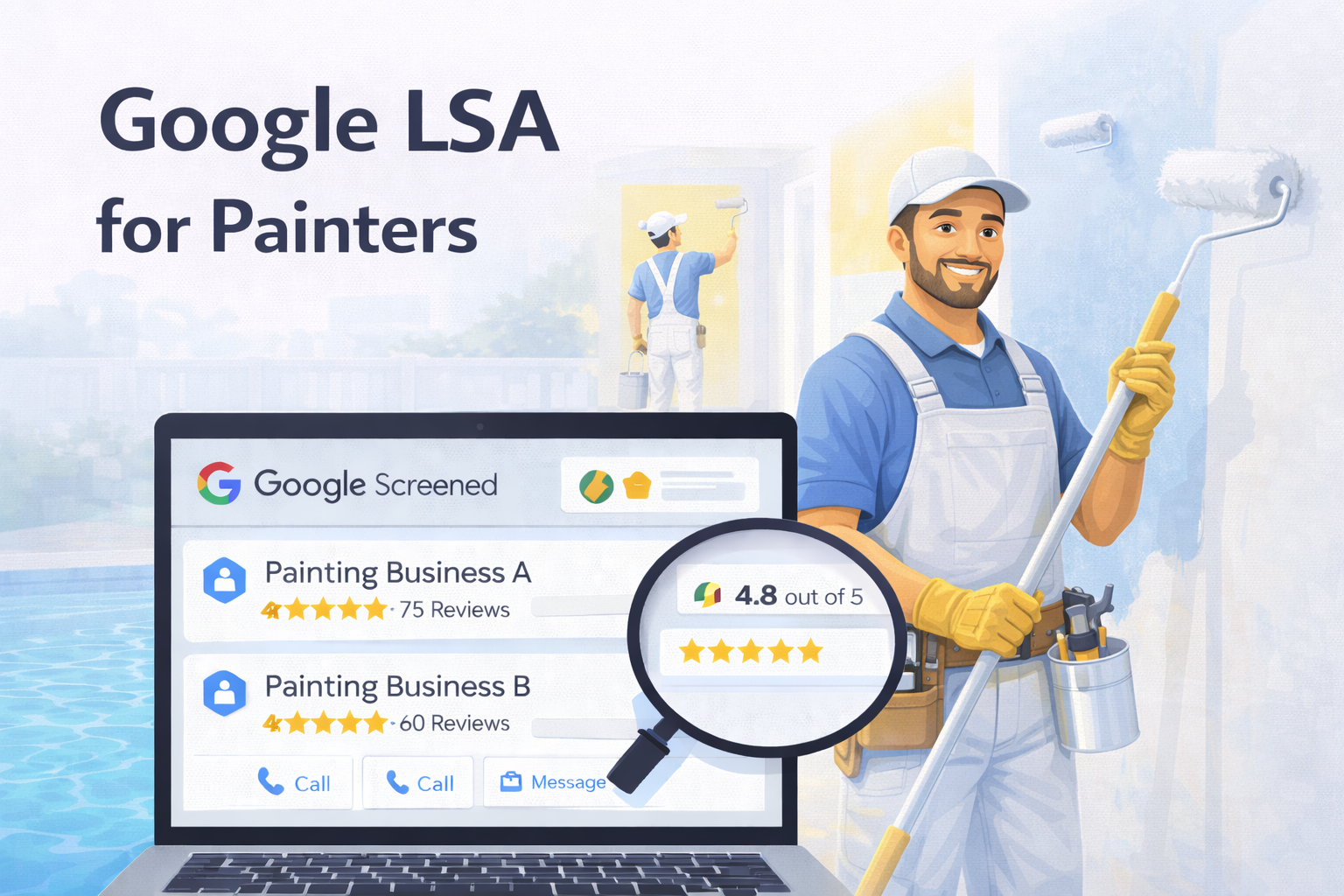
Google Local Services Ads change that math. When a homeowner searches "painter near me" or "interior painting company," your listing shows up first, above every other result on the page, with a Google Verified badge, your star rating, and a direct call button. They're not browsing five painters on Thumbtack. They're calling you because Google put you at the top and told them you're verified. That's a different kind of lead entirely.
This guide covers how to set up LSA for a painting business, what it costs per lead, how to rank above your local competitors, and how to solve the biggest problem painters face with any lead source: turning estimates into signed jobs.
Is Google LSA Worth It for Painting Contractors?
Yes, and painting has one of the best unit economics of any LSA vertical because of how large the average job ticket is.
An average ticket is revenue, not profit. The free contractor profit margin calculator shows what actually survives labor burden and overhead on a job that size.
Think about it this way: most home service trades operate on $150 to $500 job tickets. A furnace repair, a drain cleaning, a pest spray. Painting is different. A single interior repaint runs $2,000 to $6,000. A full exterior job runs $3,000 to $12,000 or more depending on the home. Cabinet refinishing sits at $3,000 to $8,000. Even a single-room repaint is typically $400 to $800. These are large job values coming from a lead that might cost you $30 to $60.
The return on ad spend math is unusually strong. At a $45 CPL and a 40% close rate, your cost per booked job is roughly $113. If the average job is $3,200, that's a 28:1 return before you factor in materials and labor. Even at a 25% close rate, you're still looking at a $180 cost to acquire a $3,200 job. Very few advertising channels deliver that kind of ratio for painters. Run the numbers for your own market with our free LSA ROI Calculator.
The other factor working in your favor: painting has less LSA competition than trades like HVAC or plumbing in most markets. Many painting contractors still rely on yard signs, Nextdoor referrals, and word of mouth. The ones who show up verified on Google with 50+ reviews are capturing a disproportionate share of the high-intent searches, and in many markets, there are only two or three painters doing it well.
What Google LSA Looks Like for Painters
When someone in your service area searches "painter near me," "house painting," "interior painter," "cabinet painter," or related terms, Google serves Local Services Ads at the very top of the page. Above standard Google Ads. Above the map pack. Above every organic listing.
Your listing shows your business name, star rating, total review count, years in business, hours of operation, and a click-to-call button. On mobile, it dominates the first screen. For a homeowner who just decided their kitchen needs a refresh or noticed their exterior paint is peeling, the decision usually comes down to who looks most credible at the top of that list.
The Google Verified badge on your listing tells the customer that Google has verified your license (where required), insurance, and background. For painting, this solves a trust problem that's unique to the trade: homeowners are inviting strangers into their home for days at a time. The badge communicates that you've been vetted before the customer even picks up the phone.
Setting Up Google LSA for Your Painting Business
Painter verification is straightforward in most states, but licensing requirements vary significantly. Some states require a specific painting contractor license, others require a general contractor or home improvement license above certain project thresholds, and some have no licensing requirement at all. Know what your state requires before you start.
| Available Job Type | Why It Matters |
|---|---|
| Interior painting | Year-round demand; highest volume category for residential painters |
| Exterior painting | Seasonal peak in spring/summer; larger job tickets ($3K-$12K+) |
| Cabinet painting / refinishing | High-margin specialty; $3K-$8K average job, strong buyer intent |
| Deck / fence staining | Spring/summer add-on; often booked alongside exterior work |
| Wallpaper removal | Niche but steady; older homes drive consistent demand |
| Commercial painting | Offices, retail, property management; higher volume contracts |
| Drywall repair / patching | Common pre-paint need; bundling increases average job value |
| Popcorn ceiling removal | Renovation-related demand; pairs naturally with interior repaints |
| Epoxy / garage floor coating | Growing category; homeowners increasingly search for this separately |
| Pressure washing | Pre-paint essential; can be standalone service or exterior paint add-on |
See the real numbers for your trade
Plug in your industry, budget, and close rate. Our calculator shows your projected leads, cost per booked job, and ROAS.
What Does LSA Cost for Painters?
Most painting markets run $25 to $75 per lead on LSA. Suburban markets with moderate competition sit at the lower end. Dense metro areas with multiple established painting companies push toward $75 and occasionally higher. For a complete breakdown of LSA pricing across all trades, see our guide to Google LSA cost by industry.
Here's why the economics work exceptionally well for painters compared to most other trades:
The large-ticket advantage
A plumber's average job is $300 to $500. An exterminator's is $150 to $300. A painter's average residential job is $2,500 to $5,000. When your job tickets are 5 to 10 times larger than other trades, your cost per lead can be higher and the return still dominates. Even at $75 per lead, a painter who closes one in three estimates is paying $225 to acquire a $3,500 job. That's a 15:1 return before you even consider referrals from that customer.
Cost per booked job math for painters
Lead cost: $45.00
× Call answer rate: × 85%
× Estimate set rate: × 70%
× Close rate: × 40%
──────────────────────────────────
= Cost per booked job: ~$189
# At $3,200 average job value:
= 17:1 return on ad spend
Notice the extra step in the formula compared to other trades: "estimate set rate." Painting is almost never a book-on-the-phone job. The customer calls, you schedule a walkthrough, you measure and quote, and then they decide. That extra step is where most painters lose leads, and it's exactly why the next section matters more than anything else in this guide.
Closing the Estimate-to-Booking Gap
This is the section that separates painters who get a great return from LSA from painters who say "the leads aren't converting." The lead quality is not the problem. The estimate process is.
Speed to estimate is everything
A homeowner who calls from LSA is ready to get started. They've seen your badge, your reviews, your years in business. They picked you. But they're also going to call one or two other painters if you don't give them a reason not to. The painter who offers a same-day or next-day estimate and shows up on time wins the job at a dramatically higher rate than the painter who says "I can get out there next Thursday."
Offer same-day estimates whenever your schedule allows. If that's not possible, next-day should be the default. Anything beyond 48 hours and you've already lost most of the competitive advantage that LSA gave you.
Send the written estimate fast
After the walkthrough, send a professional written estimate within two hours. Not tomorrow. Not "when I get back to the office." Two hours. Use an estimating app on your phone if you need to. The homeowner is making a decision right now, and the first painter to deliver a clear, professional estimate wins a disproportionate share of the time.
Follow-up closes the gap
For estimates that don't get an immediate yes, follow up at 24 hours with a brief text or call: "Hey, just checking if you had any questions about the estimate I sent yesterday. Happy to walk through anything." Follow up again at 72 hours. After that, one more at the one-week mark. Three touchpoints. That's it. Painters who follow this cadence close 40%+ of their estimates. Painters who send the quote and wait hear back from fewer than 15%.
How to Rank Higher in Painting LSA
Google's LSA ranking algorithm for painters weighs the same core factors as other trades, but certain variables matter more in painting specifically. For the full breakdown of all ranking signals, see our Google LSA ranking factors guide.
The free LSA Visibility Scanner shows which competitors are appearing above you in your own service area.
Reviews are the biggest lever
Painters with 50+ reviews and a 4.7+ star rating dominate most local markets. The good news: painting customers tend to leave detailed, positive reviews because the results are visual. They can see the transformation. Ask for a review the day the job is complete, when the customer is standing in their newly painted room feeling great about the result. That's the highest-conversion moment. For a complete review collection system, see our LSA review strategy guide.
Responsiveness rate
Google tracks how quickly you answer or return calls, and how often you miss them entirely. Painting contractors who answer 90%+ of calls within 30 seconds rank higher than those who let calls go to voicemail. If you're on a job site and can't answer every call, set up call forwarding to someone in your office or use a virtual receptionist service. A missed LSA call is worse than an unanswered call on any other platform because Google factors your response rate directly into your ranking.
Job type breadth
Every enabled job type is a search category you're eligible to appear for. Painters who only enable "interior painting" and "exterior painting" miss searches for cabinet refinishing, deck staining, wallpaper removal, and commercial painting. Each of those is a separate search query that a competitor with all job types enabled will capture instead. Review the full job type table above and make sure nothing's unchecked.
Photos and profile completeness
Painting is a visual trade. Your LSA photos are doing real selling work. Upload high-quality before-and-after images for every type of job you do: interior rooms, exteriors, cabinets, decks, commercial spaces. Google favors complete profiles with more photos, and customers make faster calling decisions when they can see your work. Aim for 15 to 20 photos minimum.
Interior vs. Exterior: Seasonal LSA Strategy for Painters
Painting is one of the most seasonal trades on LSA, and smart budget management throughout the year is what separates painters who stay busy 12 months from those who feast in summer and starve in winter.
Spring and summer (March through September)
This is peak exterior season. Homeowners want their house painted before summer parties, before selling, or before weather damage gets worse. Exterior painting searches surge 200-300% compared to winter months. This is when you should be spending your highest LSA budget. CPLs may be slightly higher due to competition, but conversion rates are excellent because buyers are motivated by weather windows and project timelines.
Interior painting stays steady during this period too. You're essentially getting leads from both search categories at peak volume. Allocate 40-50% of your annual LSA budget to these seven months.
Fall (October through November)
Exterior painting demand drops as weather cools in most markets, but interior painting picks up as homeowners shift focus to indoor projects before the holidays. This is your transition window. Scale back your overall budget 20-30% from summer levels but keep it active. Interior repaints, cabinet refinishing, and commercial projects (offices refreshing before year-end) fill the pipeline during this period.
Winter (December through February)
Exterior searches nearly stop in most northern markets. Interior painting sustains, but at lower volume. Reduce your budget to maintenance levels, but do not pause. Painters who pause their LSA in winter lose ranking momentum and take weeks to rebuild visibility when spring demand returns. Keep a minimum budget running to capture the interior painting, cabinet refinishing, and wallpaper removal searches that continue year-round.
Common LSA Mistakes Painters Make
Only enabling interior and exterior painting
This is the most common and most costly mistake. If you don't enable cabinet refinishing, deck staining, pressure washing, drywall repair, wallpaper removal, and commercial painting, you're invisible for all of those searches. A homeowner searching "cabinet painter near me" won't see you no matter how many reviews you have. Check every job type you can deliver.
Slow estimate turnaround
Painting requires in-person estimates for most jobs. The time between the LSA call and the written estimate is where leads die. Painters who take three to five days to send a quote after the walkthrough close under 15%. Painters who send it within two hours close 40%+. Build estimate speed into your daily workflow. It matters more than almost any other variable.
No follow-up after the estimate
Sending the estimate and waiting for the phone to ring is not a follow-up strategy. Many homeowners are comparing two or three estimates. A simple 24-hour follow-up text or call puts you back at the top of their mind and demonstrates professionalism. Most of your competitors won't follow up at all, so this alone gives you an edge.
Using stock photos instead of real project images
Painting is the one trade where photos sell the job before you even answer the phone. Stock photos of generic painted rooms don't build trust. Before-and-after photos of your actual work do. If you don't have professional project photos, start taking them on every job this week. Phone camera quality is fine. Good lighting and clean angles are all you need.
Pausing LSA in winter
Interior painting, cabinet work, and commercial projects don't stop in December. Pausing your LSA kills your ranking history and forces you to rebuild from scratch when spring comes. Reduce your budget in the off-season, but keep it running. The leads are cheaper in winter because fewer painters are competing, and the customers who search during winter are typically more motivated to book quickly.
If your LSA profile is live but the calls aren't coming in, our LSA no-calls troubleshooting guide walks through the most common causes and their fixes.
Should Painters Run LSA and Google Ads Together?
Yes, and the split works particularly well for painting because the customer journey has two distinct phases that each platform captures differently.
LSA captures the ready-to-call homeowner. "Painter near me," "interior painting company," "house painter," "cabinet painter near me." These are people who've decided to hire a painter and are looking for someone right now. They'll call whoever is verified, well-reviewed, and at the top of the page. LSA owns this moment.
Google Search Ads capture the research and planning phase that LSA misses entirely. Homeowners searching "how much does it cost to paint a house," "best paint colors for kitchen cabinets," "interior vs exterior paint durability," and "how to choose a painting contractor" aren't ready to call yet. They're doing homework. Google Ads with well-built landing pages converts this audience into leads that LSA can't reach. For a deeper comparison, see our Google Ads vs. LSA guide for contractors.
The seasonal complement matters too. In summer when LSA competition intensifies and CPLs rise for exterior painting, Google Ads targeting specific exterior painting keywords with landing pages can capture overflow demand at controlled costs. In winter when LSA volume drops, Google Ads targeting interior remodeling, cabinet refinishing, and commercial painting keeps leads flowing through the slower months.
The same LSA fundamentals that work for painters apply across other home service trades. If you serve multiple verticals or want to compare the economics, we cover HVAC, electrical, roofing, landscaping, and water damage restoration in separate guides.
Painter LSA FAQs
What's a good close rate for painting estimates from LSA leads?
Painting contractors who respond within 10 minutes and offer same-week estimates typically close 35-45% of LSA leads. The industry average across all lead sources is closer to 20-25%. LSA leads close at higher rates because the customer already saw your verified badge, reviews, and years in business before they called. Speed to the estimate is the biggest variable. Every hour you wait, your close rate drops roughly 5%. For more on what lead volume to expect, see our LSA lead volume benchmarks.
Should painters use LSA for both interior and exterior jobs?
Yes, enable both. Interior painting generates year-round leads with solid per-project value ($2,000-$6,000 for whole-home interiors). Exterior painting is seasonal but produces larger single jobs ($3,000-$12,000+). Having both enabled doubles your visibility across search queries. Homeowners searching "house painter near me" could need either service. You want to show up regardless of what they need.
How do painting LSA leads compare to leads from Thumbtack or Angi?
LSA leads for painters are exclusive. The customer called you directly from your listing. Thumbtack and Angi leads are shared with 3-5 other painters simultaneously, which drops your close rate and creates a race to respond. LSA leads also carry higher intent because the customer searched Google with an active need, versus browsing a directory. The cost per booked job is typically 40-60% lower through LSA than through lead reseller platforms.
What license does Google require for painters to run LSA?
Requirements vary by state. Some states like California require a C-33 painting contractor license. Others have no specific painting license but require a general contractor or home improvement contractor license above a certain project value. Google will verify whatever your state requires. If your state has no painting-specific license, you'll still need general liability insurance and to pass background checks. Check your state's contractor licensing board before starting the LSA application. For the full verification walkthrough, see our step-by-step guide.
How should painters handle the estimate-to-booking gap with LSA leads?
Painting is an estimate-heavy business. Most jobs require an in-person quote before booking. The key is shortening the gap between the LSA call and the signed estimate. Offer same-day or next-day estimates whenever possible. Send a professional written estimate within 2 hours of the walkthrough. Follow up once at 24 hours and again at 72 hours. Painters who follow this timeline close 40%+ of their estimates. Those who wait 3-5 days to send quotes close under 15%.
Is cabinet painting worth enabling as a separate job type on LSA?
Absolutely. Cabinet refinishing and painting is one of the highest-margin services a painting contractor can offer. Average job values run $3,000-$8,000, and homeowners searching for cabinet painting are typically ready to book quickly because they've already decided against a full kitchen remodel. It's a distinct search category on LSA. If you don't enable it, you won't show up for those searches. Many painters miss this entirely, which means less competition for the painters who do enable it.
Bottom Line
Painting has some of the best LSA economics of any home service trade. Large job tickets, lower competition than HVAC or plumbing in most markets, and a visual trade where before-and-after photos do genuine selling work before the customer even calls. The main challenge is unique to painting too: the estimate-to-booking gap. Other estimate-heavy trades like fencing contractors and flooring contractors face the same hurdle. But that's a process problem, not an advertising problem, and it's fixable with speed and follow-up discipline.
The painters who dominate LSA in their markets do three things consistently: they enable every job type they can deliver so they show up for cabinet, deck, commercial, and specialty searches their competitors miss. They respond to every call within minutes and offer same-day or next-day estimates. And they follow up on every unsold estimate at 24 hours, 72 hours, and one week. The advertising gets the phone to ring. The estimate process turns that call into a $3,000+ painting job.
Start with LSA to capture the homeowners searching for a painter in your market right now. Build your review base with every completed project. Layer in Google Ads when you're ready to capture the research-phase traffic. And if you want someone to look at your current setup and tell you where you're leaving painting jobs on the table, that's exactly what we do at Blue Grid Media.
Get a Free Painting LSA Audit
No pitch, no pressure. Just a real look at your numbers, your market, and what LSA should cost for your specific painting business.
Book Your Free ConsultationResults vary by market, competition, and how consistently you follow up on estimates and convert leads to booked jobs. Blue Grid Media specializes in LSA and Google Ads for local service businesses.
More on Google Local Services Ads
Part of the BGM Local Services Ads library. Pair this with the master pillar and the deep-dive guides:
Want this run for you?
Our painting contractor marketing page covers cabinet, interior and exterior campaign separation, with published monthly pricing.