Published by Blue Grid Media • Updated for 2026 • 4 min read
If you run a plumbing business and want more phone calls, you've probably heard about both Google Ads and Google Local Services Ads (LSA).
On paper, both platforms promise more leads. In reality, they work very differently, and choosing the wrong one can waste thousands of dollars.
In this guide, we'll break down how each platform works, what plumbers in your local market can realistically expect, and which option makes the most sense for your business.
What Are Local Services Ads (LSA)?
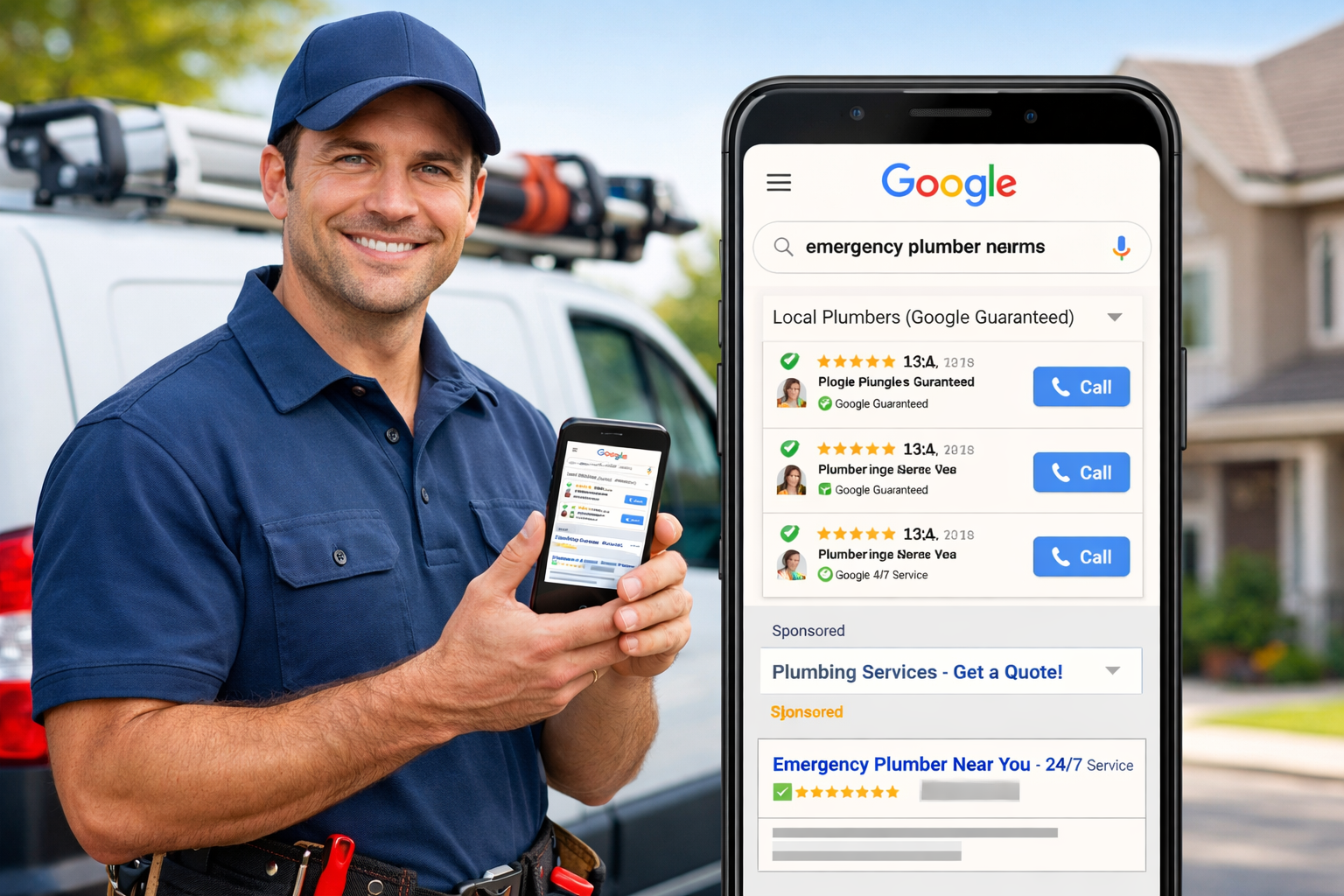
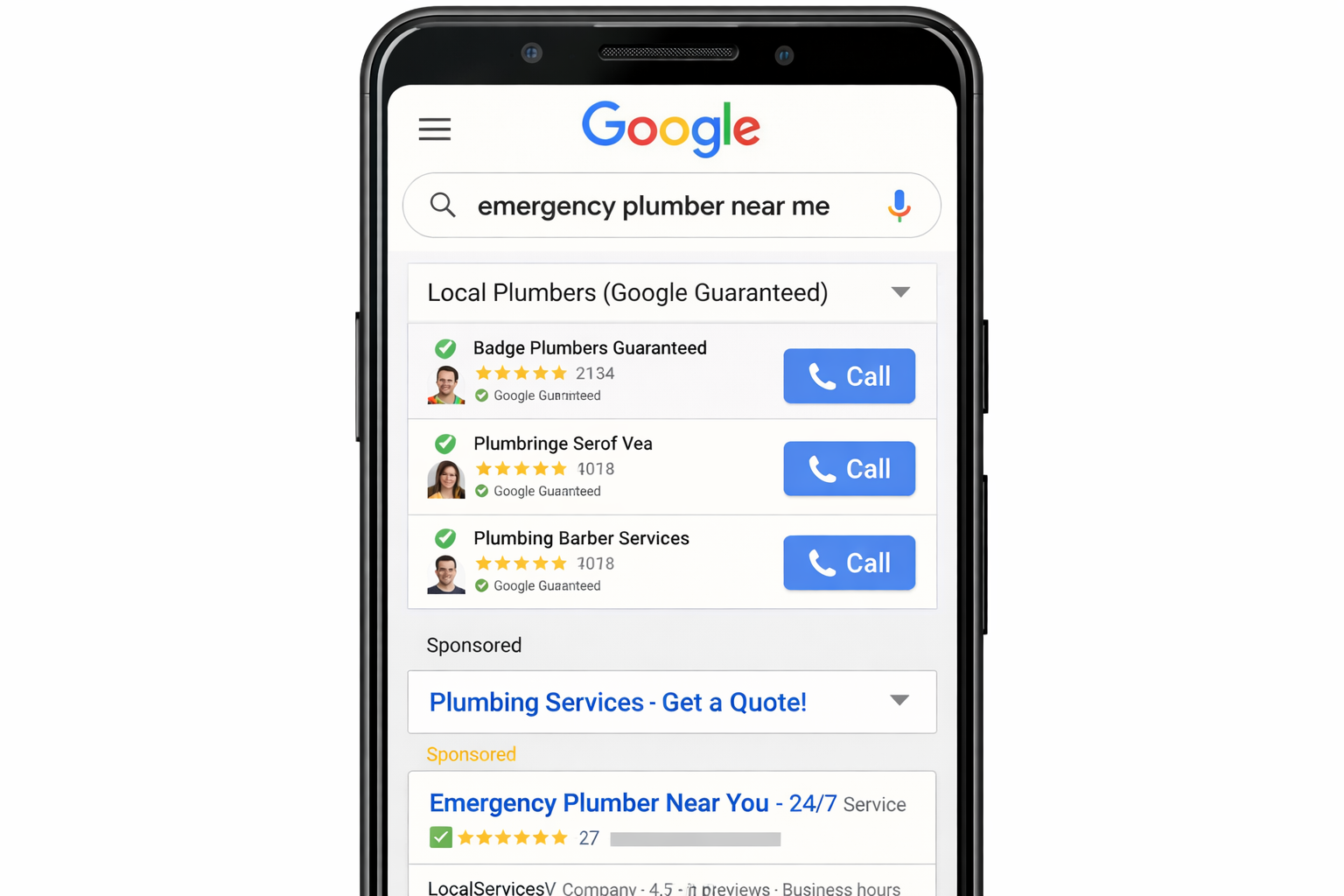
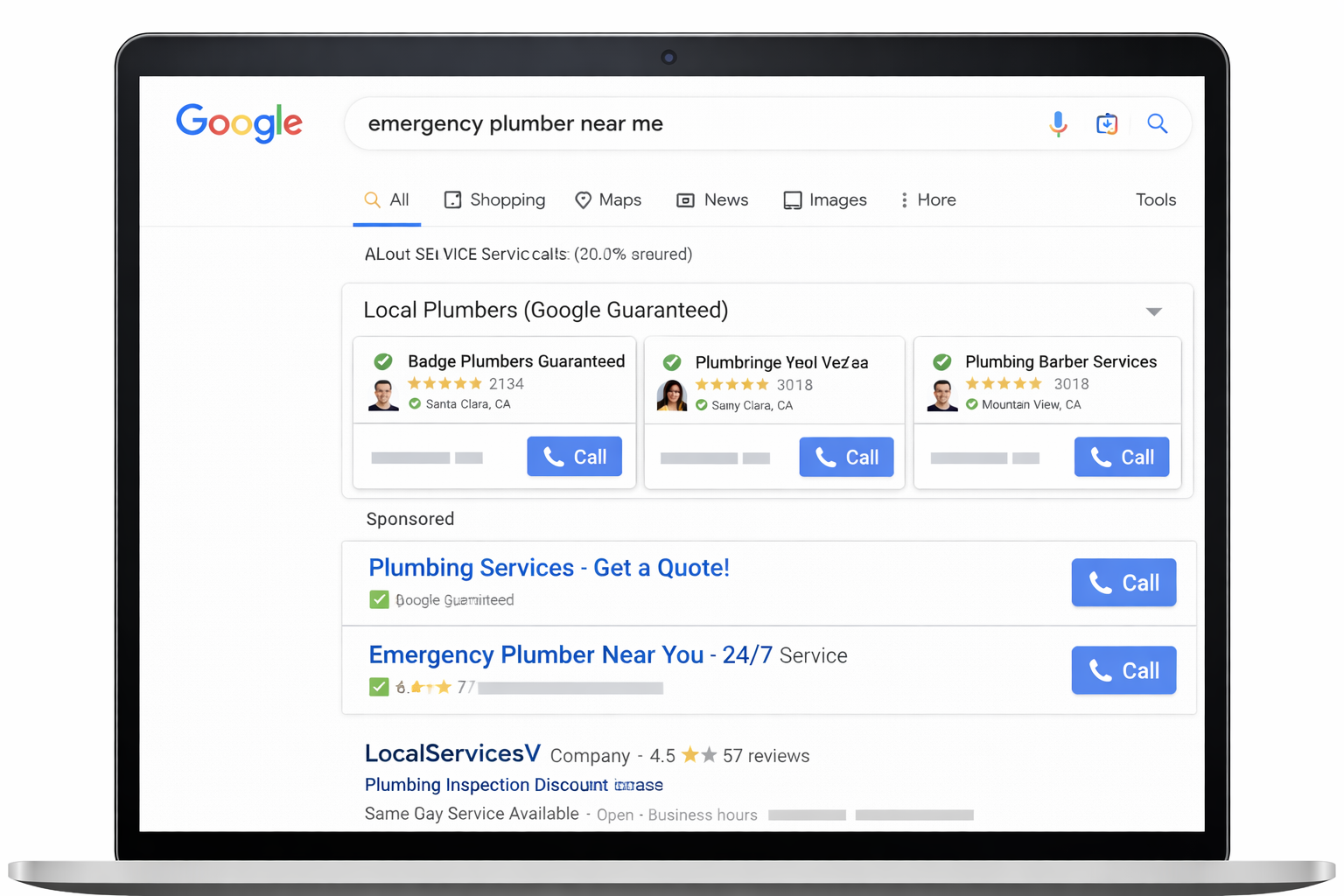
Local Services Ads appear at the very top of Google search results, above traditional ads and organic listings. These ads show your business with reviews, location, and the Google Verified badge, telling customers searching near them that your business has been screened and approved by Google.
Instead of paying per click, you pay per lead, when someone calls or messages your business directly through the ad.
For plumbers, this is powerful because most users who click LSA ads are already looking to hire someone immediately. They're not browsing local search results to learn about plumbing, they have a burst pipe or a drain that won't clear and they need help today.
See the real numbers for your trade
Plug in your industry, budget, and close rate. Our calculator shows your projected leads, cost per booked job, and ROAS.
How Google Ads Works for Plumbers
Google Ads (Search Ads) show up below Local Services Ads and allow you to bid on keywords like "emergency plumber near me" or "drain cleaning service."
With Google Ads, you pay for every click, whether the person becomes a customer or not. This gives you more control, but also more risk if campaigns aren't managed properly.
When structured correctly, Google Ads can generate consistent volume and scale faster than LSA alone, capturing homeowners in your area who are researching water heater replacement costs, comparing drain cleaning services, or looking for a plumber for a scheduled job.
Lead Quality Comparison
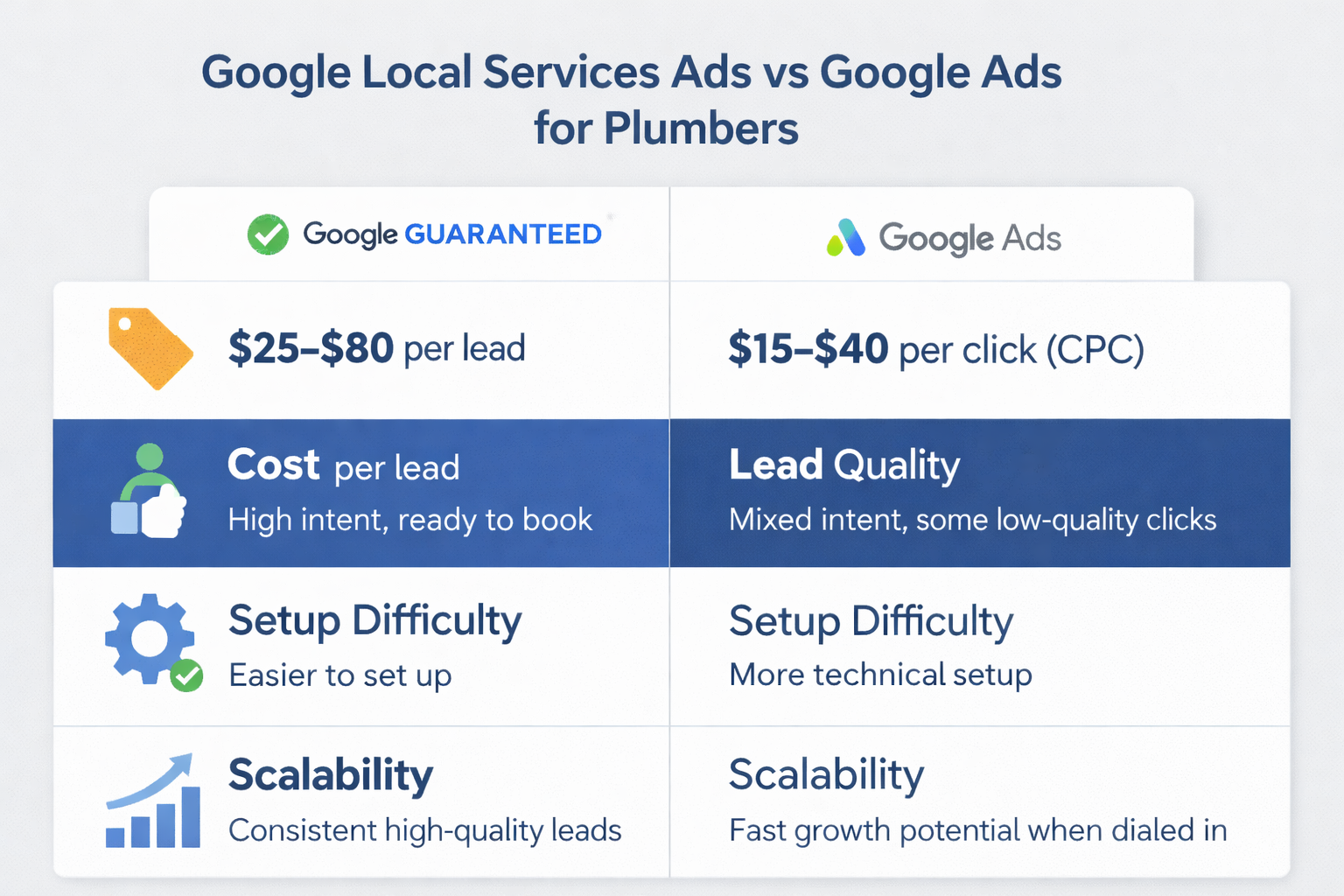
In most plumbing markets, Local Services Ads tend to produce higher-quality leads. Customers trust the Google Verified badge and are usually ready to book. They've already searched in their local area and made a decision to reach out, you're not competing against a page of results, you're the first call they make.
Google Ads can generate strong leads too, but they often include:
- Price shoppers
- Research-only visitors
- Comparison shoppers
- Out-of-area clicks
Without strong filtering and negatives, Google Ads can attract low-intent traffic.
Cost Comparison
Local Services Ads typically cost between $25–$80 per lead for plumbers, depending on location and competition in your market.
Google Ads costs vary widely. In competitive markets, plumbers often pay $15-$40 per click. A few bad clicks can quickly drain a budget. For the full breakdown of plumbing CPC and CPL by service type (emergency burst pipe, water heater, sewer line, drain cleaning, tankless, brand-authorized), seasonal bid pacing, and campaign architecture, see our Google Ads for Plumbers playbook.
While Google Ads can produce lower cost-per-lead in some markets, it requires ongoing optimization. Understanding the factors that drive LSA performance alongside Google Ads management is what separates plumbers who grow their cost efficiency over time from those who keep overspending.
Google Ads vs. LSA for Plumbers: At a Glance
| Metric | Google Ads | Local Services Ads |
|---|---|---|
| Cost Per Lead | $15–$40 per click (multiple clicks per lead) | $25–$80 per lead |
| Lead Exclusivity | Shared (customer clicks multiple ads) | Exclusive (customer contacts you directly) |
| Close Rate | ~15–20% | ~25–35% |
| Setup Difficulty | High (keywords, ads, landing pages, tracking) | Low (profile, verification, budget) |
| Best For | Scaling volume, targeting specific job types | High-intent emergency and same-day calls |
Setup and Management Difficulty
Local Services Ads require background checks, insurance verification, and profile approval. Once approved, setup is fairly simple.
Google Ads requires more technical skill:
- Keyword research
- Ad copywriting
- Landing page optimization
- Conversion tracking
- Bid management
Without experience, most plumbing companies struggle to make Google Ads profitable.
Which Platform Is Better for Most Plumbers?
For most plumbing businesses, the best approach is:
- Start with Local Services Ads for stable, high-intent leads from customers searching near you
- Add Google Ads once LSA is performing consistently
- Use both together for maximum market coverage
LSA provides reliability. Google Ads provides scalability. When combined, they create a strong lead generation system that covers both the urgent calls from local customers who need help now and the planned jobs from homeowners earlier in the decision process.
For a step-by-step breakdown of how to run both platforms together effectively, see our full Plumbing Ads Playbook, it includes a 6-step LSA checklist, an 8-step Google Ads blueprint, and a worked example showing the before/after on cost per booked job.
Common Mistakes Plumbers Make
- Running Google Ads without call tracking
- Leaving LSA profiles unoptimized
- Ignoring lead disputes
- Overbidding in competitive zones
- Not answering calls fast enough
These mistakes compound on each other. An LSA profile with stale reviews and no photos will convert poorly no matter how much you spend on it. Add in missed calls and you're paying for a channel you've kneecapped before it can work. The fix for most of these is operational, not technical, answer faster, request reviews after every job, and log outcomes in your LSA dashboard so Google can learn what a good lead looks like for your business.
Advertising only works when paired with strong follow-up systems. If your team can't consistently answer calls during business hours and return missed calls within 15 minutes, fix that first, both LSA and Google Ads will perform significantly better with a reliable call handling process in place.
Want the full multi-channel picture, not just Google Ads vs LSA? See our complete plumbing leads channel comparison, which covers LSA, Google Ads, GBP, pay-per-call services like ResultCalls, shared lead aggregators (the "I tried Angi" story), property manager contracts, and insurance/restoration partnerships, with real 2026 CPLs for each.
Final Recommendation
If you're choosing between Google Ads and Local Services Ads, start with LSA.
The dividing line is simple: LSA is lower risk, easier to manage, and the lead quality for urgent plumbing searches is consistently higher. You pay per contact, not per click. Once you have a call handling process in place and you're booking jobs consistently from LSA, add Google Ads to extend your reach into broader intent searches and scale your overall lead volume.
The plumbers who win long-term are the ones who build systems, not just campaigns. A well-optimized LSA profile combined with a tightly structured Google Ads account gives you coverage across every stage of the customer journey: from the homeowner who needs an emergency plumber right now to the one comparing options for a bathroom remodel three months out.
Results vary based on market competition, budget, seasonality, and follow-up processes.
More on lead channel comparisons
Part of the BGM lead channel comparison library: